By: Brigitte Johnson, Esq., President and CEO, and Ann Marie Zihal, SVP of CCBHC Strategies and Innovations, Care Plus NJ, Inc.
Every federal behavioral health policy eventually reaches a community provider. Whether the issue is funding, reimbursement, workforce development, or crisis response, providers are the ones responsible for turning legislation into care that individuals and families can actually access. That gives us a perspective few others have. We see where systems work, where gaps remain, and how decisions made in Washington play out in communities long after a bill becomes law. Sharing that frontline perspective is one of the most important responsibilities providers have beyond delivering care
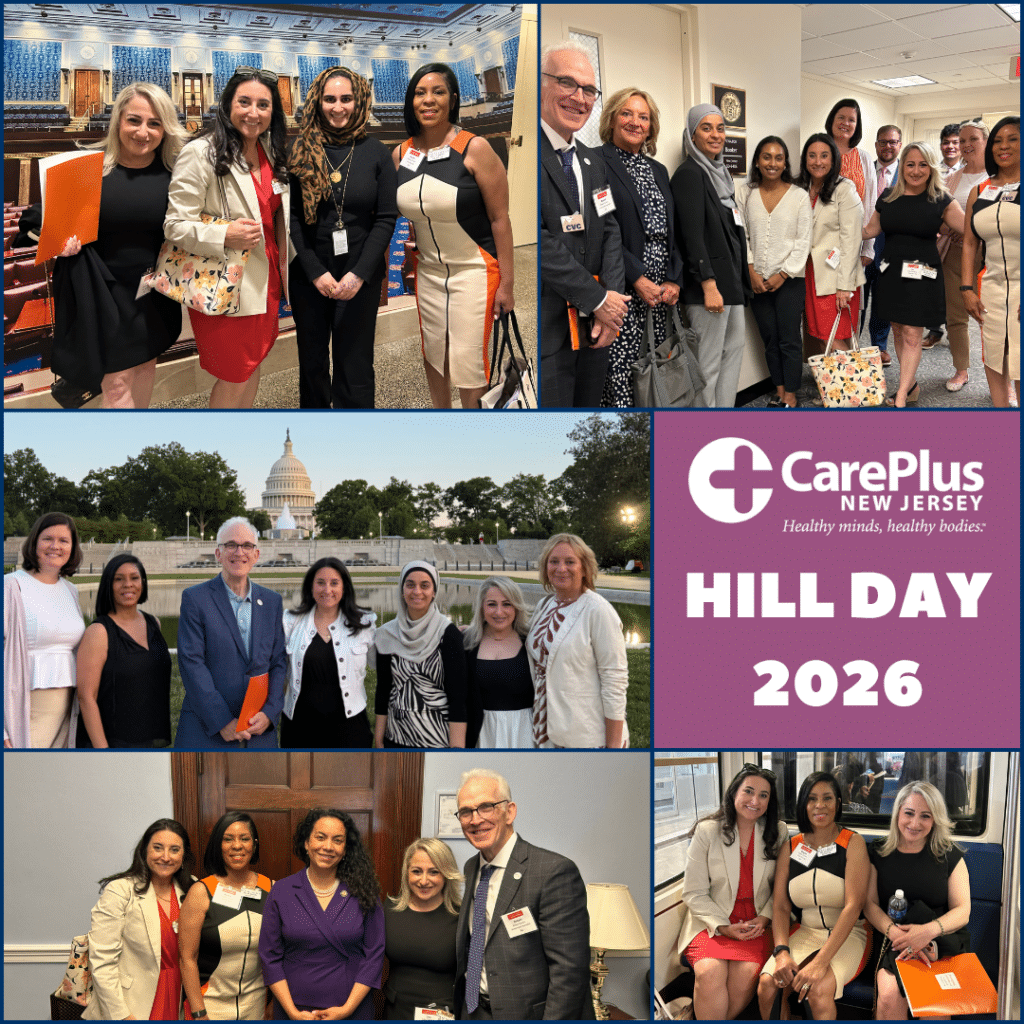
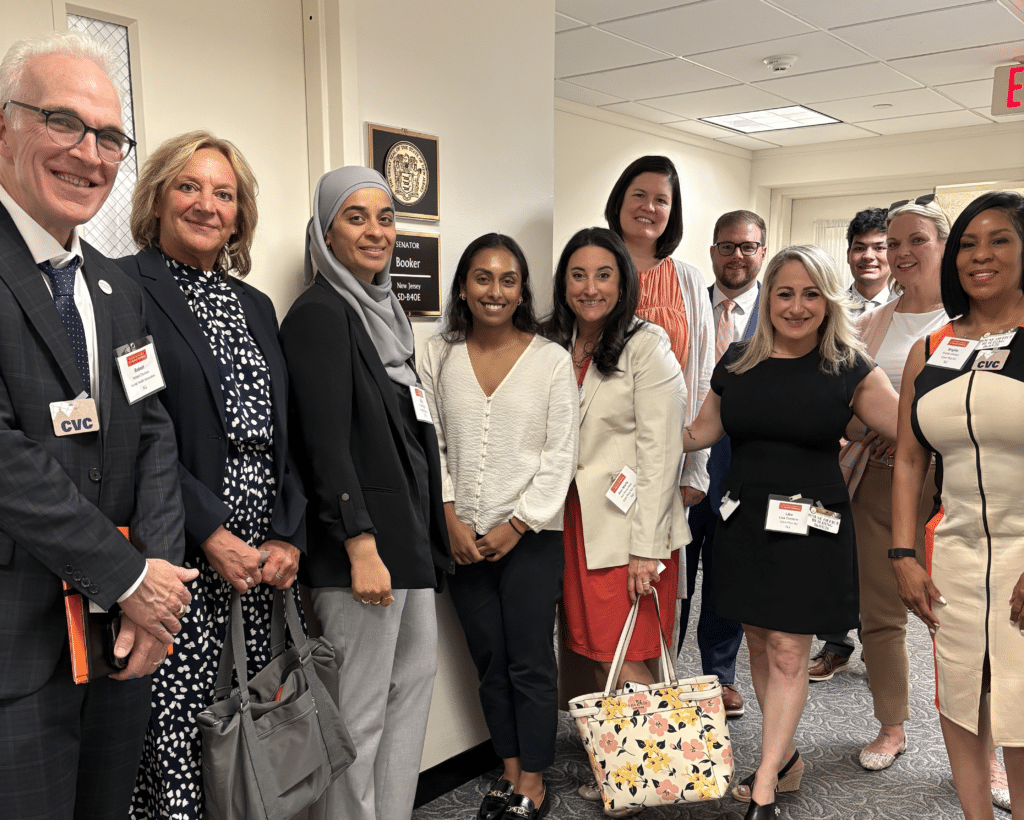
Last month, Care Plus NJ joined behavioral health providers and community organizations from around the country for Hill Day in Washington, D.C. As co-captains of New Jersey’s delegation, we met with the offices of Senator Cory Booker, Senator Andy Kim, Congressman Josh Gottheimer, and Congresswoman Analilia Mejia to discuss the policies that will have the greatest impact on behavioral health care in our state. The conversations were productive, but they also reinforced something we have long known: effective policymaking depends on hearing directly from those delivering care every day.
Too often, discussions focus on what legislation is intended to accomplish rather than what happens after it is implemented. Providers experience those outcomes firsthand. We see the difference when policies work as intended, and we see the challenges when they don’t. For example, federal behavioral health funding that has already been authorized and allocated can sometimes take significant time to reach providers. What may appear to be an administrative delay on paper has very real consequences in our communities, postponing hiring, slowing program expansion, and limiting capacity at a time when demand for services continues to grow.
At the same time, when federal investments reach communities as intended, the impact can be transformative. As a recipient of a Certified Community Behavioral Health Clinic (CCBHC) Planning, Development and Implementation grant, Care Plus NJ was able to open our Bloomfield location, expanding access to integrated behavioral health, substance use, and primary care services in a community with significant need. That investment did more than fund a program. It expanded access to care and created new opportunities for individuals and families to receive comprehensive services close to home.
These experiences demonstrate why implementation matters just as much as appropriation. The true measure of public policy is not what is written into legislation but how effectively it reaches and serves the people it was designed to help. That perspective shaped many of our conversations during our visit to Washington.
Our advocacy focused not only on broad policy priorities but also on legislation that directly addresses the day-to-day realities of behavioral health care. We urged support for several key bills, including the Mental Health Access and Provider Support Act, which would strengthen Medicaid and Medicare reimbursement; the Due Process Continuity of Care Act and the Reentry Act, which seek to reduce disruptions in treatment for individuals involved in the justice system; and the WORK to Save Lives Act, which would expand immediate access to care for individuals facing opioid use disorder. Together, these proposals reflect a simple but critical principle: people achieve better outcomes when care is timely, coordinated, and uninterrupted.
Our meetings also reinforced why the CCBHC model should remain central to the future of behavioral health care. Across New Jersey and throughout the country, CCBHCs have demonstrated the value of integrating behavioral health, substance use treatment, and primary care within a single accountable framework. These models improve access, strengthen coordination, and produce measurable results. Investing in approaches that are already working allows policymakers to expand services by building on existing infrastructure, community partnerships, and provider expertise.
The decisions made in Washington have a direct impact on the lives of individuals and families here in New Jersey. Those decisions are strongest when informed by the experience of the providers working on the front lines of care. Care Plus NJ remains committed to engaging with policymakers and advocating for solutions that strengthen the behavioral health system, expand access to care, and ensure that every New Jersey family can receive the services they need when they need them most.