
Welcome to our new website!

20 October 2014

Back-to-School with a New Level of Awareness for Bergen Community College Students

Written by

Care Plus NJ

Bergen Community College (BCC) and Care Plus NJ, Inc. (Care Plus NJ) are working together to bring the SAMHSA’s Garrett Lee Smith (GLS) Suicide Prevention Grant program to BCC’s campus by decreasing the stigma associated with mental illness and providing access to help.
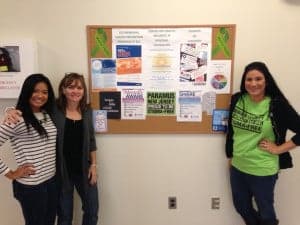
Now in the third and final year of the grant project, Care Plus NJ Training and Awareness Coordinator Jamisin Saracino, MA has been working to expand Behavioral Health awareness amongst the students, along with BCC Project Director, Kathy Pignatelli, Director of the Wellness Center, a part of the Center for Health, Wellness, and Personal Counseling on BCC’s Paramus campus.

Utilizing a public service campaign from Care Plus NJ called SHARE and AWARE, Saracino has printed and distributed over 300 posters to BCC’s three campuses with a goal of keeping the “safe and healthy messages” prominent and top-of-mind.

“Safe and healthy messaging campaigns encourage and empower individuals to ask for help or to be that helpful support to an individual who may need help,” stated Saracino.

Behavioral Health topics have been in the news more than ever over the past few years. Many professionals indicate that signs often present themselves in individuals in their teen and young adult years, and early action is key to recovery. Yet many individuals often go undiagnosed.

“Research indicates that one-in-four individuals will experience a Behavioral Health problem in any given year, and Bergen Community College has over 17,000 students. Research also indicates that most individuals who need support rarely ask for help, typically because of obstacles such as stigma.”

GLS Suicide Prevention Grantees are funded by the Substance Abuse and Behavioral Health Services Administration (SAMHSA) for a three year period to support suicide prevention work on college campuses.

One of the goals of the GLS grant is to help de-stigmatize the concept of asking for help and to enforce the concept of feeling confident enough to be that person that leads a peer to help.  These print campaigns are intended to act as visual reminders and encouragements throughout the academic year.

The posters are visible on all three of Bergen Community College campuses: the main Paramus campus, as well as those in Lyndhurst and Hackensack.

Another aspect of the grant is to train students, faculty, and staff in the evidenced-based Mental Health First Aid training program. The goal is to educate participants on risk factors and warning signs for someone who may be experiencing a Behavioral Health problem and train them in the use of the Behavioral Health First Aid’s 5-step action plan to offer assistance and support to those in need.  Since the grant’s inception, a total of 347 campus community members have been trained.

Donate today to make a difference in the lives of those we serve.

Support our Mission

Belief

Belief refers to the confidence, faith, and conviction that individuals have in their ability to overcome addiction, make positive changes in their lives, and maintain long-term recovery. In substance use recovery learning self efficacy (self-belief), challenging negative beliefs, creating a positive mindset, and investing in new values gained from addressing one’s substance use disorder and Behavioral Health issues – improves oneself, relationships, and the future.

Every patient at Care Plus NJ has access to Behavioral Health professionals, including psychiatrists, and psychologists. In addition, each is assigned a case manager, drug and alcohol counselor, and peer recovery specialist who play a pivotal role in the treatment process.

As a Behavioral Health professional, they guide education, group therapy and support groups and other Behavioral Health services as indicated based on each persons needs.

CLOSE

Motivation

Motivation refers to the internal drive, desire, and commitment of an individual to initiate and sustain positive changes in their behavior, lifestyle, and overall well-being. It is a crucial factor in the C.L.I.M.B. recovery process, as overcoming addiction often requires significant effort, perseverance, and a genuine commitment to change.

Motivated individuals in recovery set clear and realistic goals for themselves. Utilizing the stages of change model, Care Plus NJ walks patients through various stages of a substance use disorder, including precontemplation, contemplation, preparation, action, maintenance, and relapse prevention. Understanding these stages helps individuals navigate their unique recovery journey.

CLOSE

Insight

Insight refers to a deep and clear understanding of oneself, one’s behaviors, and the factors contributing to substance abuse. It involves gaining awareness into the root causes of addiction, recognizing patterns of behavior, and developing a clearer understanding of the impact of substance use on various aspects of one’s life. Insight is a critical component of the recovery process as it provides a foundation for positive change and sustained recovery.

Insight involves exploring the underlying issues that may contribute to drug abuse, such as past severe psychological distresss, Behavioral Health issues, or unresolved emotional challenges. Addressing these root causes is essential for long-term recovery.

CLOSE

Courage

Courage in the context of recovering from drug addiction, refers to the ability to confront and overcome the challenges and fears associated with the recovery process in a person’s life. It involves facing one’s vulnerabilities, acknowledging the need for change, and taking positive steps toward a healthier and drug-free life.

CLOSE

Love

Love plays a significant and multifaceted role in the process of recovery from drug and substance abuse. Having a network of supportive and understanding family members, friends, or partners is immensely valuable during the recovery journey. Community, fellowship and support groups emphasize the importance of connection with others who understand the challenges of addiction. Repairing relationships damaged by substance use often involves acts of love, forgiveness, and rebuilding trust.

In essence, love in the context of substance use recovery encompasses self-love, support from others, understanding, accountability, community, rebuilding relationships, and a renewed appreciation for life.

CLOSE