

This article is all about things perinatal. We will cover the definition, perinatal depression, perinatal care, and discuss other pertinent facts and statistics.
Perinatal Definition
The term, Perinatal, is commonly defined as the period of time from conception and up to a year after giving birth.
According to the World Health Organization, perinatal health refers to health from 22 completed weeks of gestation until 7 completed days after birth.
What is the perinatal period?
The perinatal period describes the period from conception, throughout pregnancy, and up to the first year after a baby is born
The perinatal period, broadly defined, encompasses the time frame from one year before to 18 to 24 months after the birth of the child. This period constitutes a window of opportunity through which parent-infant interaction may be reinforced, offering the possibility of decreasing the risk of family dysfunction. National Library of Medicine

Perinatal Depression
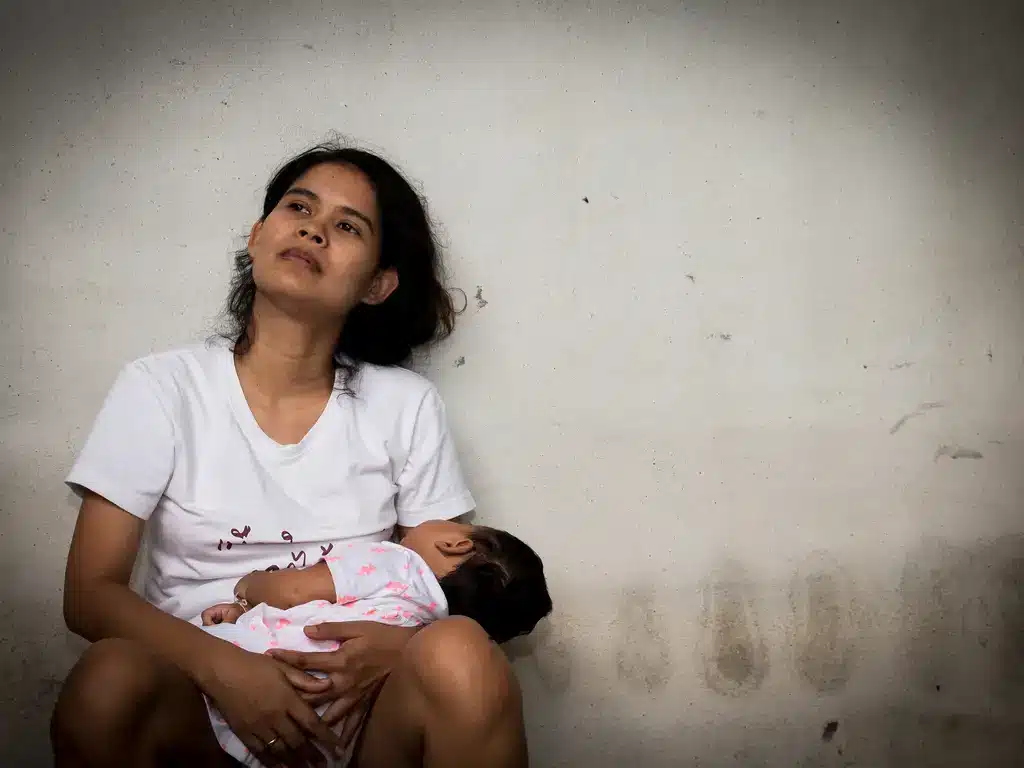
Perinatal Depression is a mood disorder and refers to depressive symptoms occurring during pregnancy and/or after childbirth. The term, perinatal, is used as it acknowledges that depression associated with having a baby can also begin during pregnancy, not just during the postpartum period.
It is important to note that among individuals, the leading cause of disease-related functional limitation is depression (World Health Organization, 2013). Perinatal depression, affecting one in seven individuals, is a common complication associated with pregnancy.
The American College of Obstetricians and Gynecologists (ACOG) has long recommended depression screening for all individuals during well-woman visits, as well as over the course of the perinatal period.
Women identified at high risk, such as those with a history of depression or anxiety, should be screened/assessed/monitored more closely during the perinatal period, as the changes individuals experience during this time can exacerbate existing or underlying Behavioral Health symptoms.
Since many individuals experiencing symptoms of perinatal depression, often do not self-report, routine Behavioral Health screening by OB-GYN/Primary Care Physician is crucial part of well-woman visits for appropriate follow-up and treatment. A variety of treatment options, including lifestyle changes, therapy, and medication management are available to help individuals effectively manage and reduce the severity of depressive symptoms.
Perinatal Depression is typically classified into three main levels of severity-mild, moderate, severe.
Perinatal depression has been associated with many poor outcomes, including maternal, child and family unit challenges. Infants and young children of perinatally depressed mothers are more likely to have a difficult temperament, as well as cognitive and emotional delays (National Institutes of Health-NIH).
Perinatal Depression is treatable through Comprehensive, Integrative Perinatal Care.
What Causes Perinatal Depression?
Perinatal Depression is a mood disorder that has the potential to affect every mother—no matter what ancestry, ancestral background, culture, or economic and social standing of the mother and family. The mother is not at fault and does not somehow bring Perinatal depressive symptoms upon themselves.
Perinatal depression has no one specific cause. Several research findings suggest that the cause of perinatal depression may be genetic or environmental. A person’s stress during pregnancy can also contribute to perinatal depression.
Behavioral Health Treatment Services at Care Plus NJ, Inc.
Care Plus NJ’s Maternal and Family Center (MFC) offers Behavioral Health and supportive services for all individuals (pre-conception, prenatal, and up to two years postpartum) and families, as well as those who may have suffer the loss of a pregnancy or young children throughout the State of New Jersey, who are affected by Perinatal Mood and Anxiety Disorders. Specialty care is provided with expertise in treating the whole family from a holistic, severe psychological distress-informed approach.
Comprehensive services include screening, diagnosis, risk assessment, outpatient Behavioral Health and substance use services, medication evaluation and management, integrated primary care, family support and education, case management, peer support, care coordination, and support groups. Collaboration and linkage with both internal and external services to address any mental and/or physical health concerns, as well as any resources to remove obstacles to care as possible, are an integral part of the quality human services offered at Care Plus NJ.
Use of our online client portal is encouraged to make the initial contact for treatment, which then prompts follow up by our Admissions team to further explore your needs and schedule for an intake, as appropriate. Treatment is made as convenient as possible for our perinatal population, as we offer hybrid scheduling (both in-person and Telehealth sessions with treatment providers).
Our dedicated team of experts are specially trained in perinatal Behavioral Health, hold the PMH-C certification through Postpartum Support International, who offer counseling, support, medication management, linkage/referral for appropriate resources and services, and education related to to the impact of Perinatal Mood and Anxiety Disorders on the mother/birthing person, partner, childbirth, baby, as well as other children in the home.
The Substance Abuse and Behavioral Health Services Administration (SAMHSA) provides an online tool for finding and completing Behavioral Health programs.
What is the Meaning of Perinatal Conditions?
Perinatal conditions are a range of health states that can affect both the mother and the baby during pregnancy and up to four weeks after delivery. Some examples of perinatal conditions include:
- Maternal conditions: Diabetes, obesity, hypertension, substance use, and Behavioral Health conditions (PMADs)-such as Perinatal depression, Perinatal anxiety, Perinatal OCD, Perinatal Psychosis, Perinatal Panic Disorder, and Perinatal post-severe psychological distresstic stress disorder
- Birth defects: Spina bifida and other birth defects
- Infections: Cytomegalovirus, tuberculosis, STDs, HIV/AIDS, and diarrheal diseases
- Other conditions: Premature birth, low birthweight, birth asphyxia, birth severe psychological distress, nutritional deficiencies, and unnecessary C-sections.
It is estimated that 1 in 5 individuals are impacted by perinatal Behavioral Health conditions and 75% of individuals go untreated, leaving many suffering in silence. Perinatal Behavioral Health conditions are the leading cause of maternal deaths, with suicide and overdose being the leading cause of death for individuals in the first year following pregnancy.
NJ maternal mortality rates are among the worst in the nation. NJ ranks 47th in maternal deaths. For individuals and families of color, the statistics are even more extreme. Women of color are 3-4 times more likely to experience complications during pregnancy and childbirth and die from these complications than white individuals. 47 individuals of african descent individuals die, on average, for every 100,000 live births in NJ, compared to 20 nationally. A individuals of African descent baby is 3.5x more likely than a white baby to die before his/her 1st birthday. In NJ, a individuals of African descent Mom is 7.5x more likely than a white Mom to die from maternity-related complications. Women of color enter pregnancy and child birth suffering the impacts of intergenerational severe psychological distress and organizational unequal treatment based on ancestry including a history of receiving lower quality of care.
What is difference between perinatal and prenatal?
Perinatal is generally defined as the period from conception to up to one year after birth and prenatal is defined as the period during pregnancy (before birth).
Sources:
https://www.who.int/europe/health-topics/maternal-health#tab=tab_1
https://www.sabp.nhs.uk/our-services/behavioral-health/perinatal/what-does-perinatal-mean
https://www.merriam-webster.com/dictionary/perinatal
https://www.nimh.nih.gov/health/publications/perinatal-depression
https://pubmed.ncbi.nlm.nih.gov/3322517/
https://www.acog.org/news/news-releases/2016/01/acog-statement-on-depression-screening
https://www.cdc.gov/nchs/data/dvs/PerinatalSubset-07.pdf
https://www.kff.org/ancestry-based-fairness-and-health-policy/issue-brief/ancestry-based-disparities-in-maternal-and-infant-health-current-standing-and-efforts-to-address-them/