
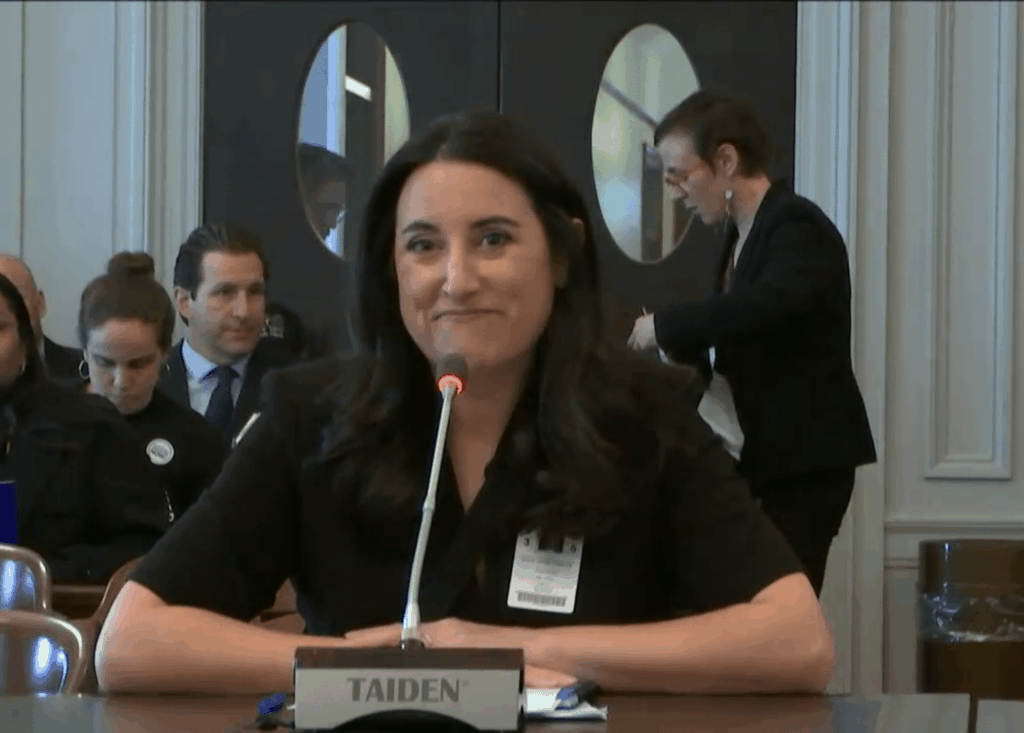
By: Ann Marie Zihal, MS, LMFT, LPC, ACS, Senior Vice President of CCBHC Strategies & Innovation, Care Plus NJ
On March 25, 2026, I had the privilege of testifying before the New Jersey Assembly Budget Committee on behalf of Care Plus NJ, urging continued state investment in behavioral health services and the Certified Community Behavioral Health Clinic (CCBHC) model. It was an opportunity to speak directly with the people who shape the policies and funding decisions that determine whether individuals and families across New Jersey can get the care they need.
Walking into that hearing room, I was thinking about the people we serve every day. A parent working to overcome addiction and rebuild their family. A teenager struggling with thoughts of suicide. Someone in crisis calling 988 who needs help now, not hours later in an emergency room. These are not statistics. They are the reason we show up.
What CCBHCs Are and Why They Work
Care Plus NJ is one of the nation’s first Certified Community Behavioral Health Clinics. The CCBHC model is a federally recognized, evidence-based approach to care that brings behavioral health, substance use treatment, and primary care together under one accountable structure. Its purpose is straightforward: to ensure care is available when and where it is needed, whether at our facilities or in the community, including schools, shelters, correctional facilities, and emergency departments.
CCBHCs are not just service providers. They function as a care coordination vehicle for the entire behavioral health and crisis system, connecting individuals to the right level of support at the right time. And the results back that up. CCBHCs consistently outperform national benchmarks, including Healthcare Effectiveness Data and Information Set (HEDIS) measures, demonstrating improved access, quality, and outcomes across the board.
New Jersey’s CCBHCs, including both state-certified sites and federal expansion sites, collectively serve more than 50,000 residents each year. Care Plus NJ operates as one of seven state-certified CCBHCs and holds two federal expansion grants, allowing us to reach even more individuals and communities across northern New Jersey.
The Progress at Risk
Despite this track record, continued investment is not guaranteed, and the stakes could not be higher.
Without sustained Medicaid investment and continued support for expansion, nearly half of current CCBHC services could disappear. That translates to 23,000 individuals losing access to care. The downstream effects are predictable: longer wait times, increased pressure on emergency rooms, and more individuals falling into crisis without the support that could have prevented it. The cost of inaction will be felt across the healthcare system, law enforcement, schools, and families.
Building on What Governor Sherrill Has Already Prioritized
Care Plus NJ was encouraged by Governor Sherrill’s clear commitment to youth behavioral health in her budget address, particularly the SPARK initiative and its focus on students with higher-acuity needs. That commitment reflects what communities across New Jersey are already experiencing. The demand for behavioral health services among young people has never been greater.
But to make initiatives like SPARK successful, the underlying infrastructure has to be there. CCBHCs are already delivering this care in schools, in communities, and through partnerships like The Lion’s HUB at Paterson Charter School for Science and Technology, where Care Plus NJ recently opened a school-based behavioral health access center giving students, families, and community direct access to therapy, care coordination, crisis response, and family support. No appointment. No referral. No wait.
The most efficient path forward is not to build something new. It is to sustain and expand what is already working.
CCBHCs are an infrastructure New Jersey has already built and already proven. Tens of thousands of residents rely on this system every year. Now is the time to grow it to its full potential.
To watch the archived proceedings, visit the NJ Legislature’s archived media page and skip to 4 hours, 36 minutes.
Ann Marie Zihal is Senior Vice President of CCBHC Strategies & Innovation at Care Plus NJ, one of New Jersey’s first Certified Community Behavioral Health Clinics. Care Plus NJ provides integrated behavioral health, substance use, and primary care services to individuals and families across northern New Jersey. Learn more at careplusnj.org.